Below are video presentations from our Quarterly and Annual meetings.
Legislative/Governing
- 2026 Legislative Summary – Jeff Forester provides a summary of what happened and what didn’t
- MAISRC Researches Value of AIS Prevention Aid – the value of the $10M AIS grant funds are studied
- 2026 Early-term Legislative Update – a review of water related matters in the early days of this term
- 2026 Legislative Agenda Update – an initial summary of where we’re at in the State Legislature
- Wrap Recycle Right – an introduction to the state’s new boat wrap recycling law and initial efforts
- Ottertail County’s Vacation Home Rental Ordinance – a review of the newly created ordinance.
- Protecting Minnesota’s Waters – an update on legal actions underway to protect our waters
- 2nd Tier Developments – a discussion on the impacts of adding more people and activities to a lake
AIS/Water/Wildlife
- Sea Grant’s HAB Lake Lookout Program – a new program to follow HABs
- MAISRC Researches Value of AIS Prevention Aid – the value of the $10M AIS grant funds are studied
- New Approach to Stop the Spread of Starry Stonewort – a proposal to focus efforts to stop Starry Stonewort
- Regional AIS Inspections – a summary of the Wright County effort – pros and cons
- State of the Market – a discussion among scientists and applicators on the current state of AIS management
- Minnesota’s Beavers! – a presentation on the importance and benefits of this misunderstood partner
- Hydrilla: A Formidable AIS coming our way – a summary of the world’s worst AIS
- Using Drones for Lake Management – a Michigan company is using new technology to great effect
- Vanishing Natural Shorelines – the health of a lake starts at the shore but the shores are disappearing
- Protecting the Sponge – the health of a lake is also affected by surrounding forests
- Hybrid Cattails – what’s the concern? – hybrid cattails are emerging as a serious nuisance
Lake Association Management
- MN COLA Perspectives and Board Election – what happened over the past year
- Wrap Recycle Right – Minnesota’s New Boat Wrap Program
- Modernizing HOA Management – using HOA management software for lake management
- Spotlight on GCOLA – the Gull chain of lakes is highlighted
- 2025 Minnesota Boating Guide – the DNR’s Marine Unit Supervisor provides a summary of MN boating laws
- Spotlight: Sauk River Chain of Lakes – the Sauk Chain is highlighted
- Minnesota Sea Grant Extension Program Offerings – MN Sea Grant grants are reviewed
- Michigan’s Glen Lake Association – a large lake management organization is reviewed
Background Science
- Septic Systems and Water Quality – a UMN scientist discusses the science of septic systems
- Effects of Limited Snow Cover over 2023-24 – a scientist and engineer discuss the impacts of a very light snow pack
- Evidence of Climate Change on Water – Dr. Mark Seely discusses climate trends coming to MN and the effects on water
- Climate Change and Lake Resiliency – The NCA4 report and IPCC 6th Assessment Report are discussed with respect to future effects on MN waters
MN COLA Perspectives and Board Election
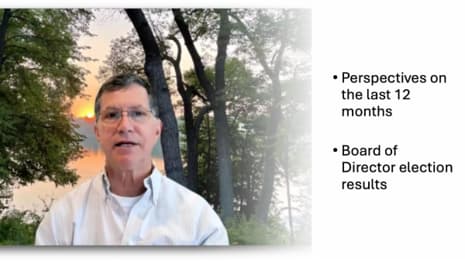
Joe Shneider provided his perspectives on MN COLA over the last 12 months, highlighting our recent actions on protecting the waters from the impacts of wake surfing. And he announced the results of the recent Board of Director elections where Ezri Farnum and Keegan Lund joined the Board. Joe also reflected on the contributions of Jim Gray and Don Deutsch, who both stepped down from the Board as of June. (June 17, 2026)
Sea Grant’s HAB Lake Lookout Program
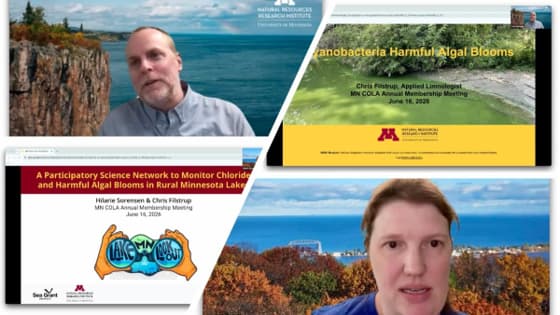
Hilarie Sorenson from MN Sea Grant and Chris Filstrup, a limnologist at the U of MN’s Natural Resources Research Institute, spoke to us about Sea Grant’s Lake Lookout program and harmful algae blooms HAB’s). This is an important conversation that will better inform you of what’s happening in the water. (June 17, 2026)
2026 Legislative Summary
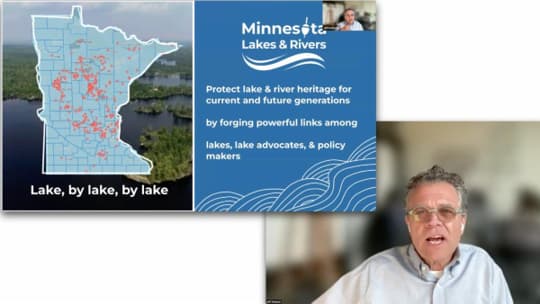
Jeff Forester from MN Lakes and Rivers Advocates gave us an update on the outcomes of the 2026 Legislative session along with an overview of their strategy to help retain the annual distribution of $10 million in AIS Prevention Aid. This latter topic is of vital importance in our efforts to prevent the spread of AIS in the state. (June 17, 2026)
Wrap Recycle Right – Minnesota’s New Boat Wrap Program

In this webinar Sarah Bonvallet presented an overview of Minnesota’s new boat wrap recycling program: Wrap Recycle Right. This program was created under the state’s first Extended Producer Responsibility (EPR) law for boat wrap. She explained how the law shifts recycling responsibility to producers, she outlined the role of key partners, and she described Minnesota’s significant volume of boat wrap waste, including practical and valuable uses of the recycled boat wrap.
Sarah explained how the program will operate, and the importance of collecting clean, “recycle‑ready” material. Sarah walked members through the steps of building a state-wide program and how they can get involved. MN State Representative Larry Kraft provided a brief introduction explaining how his boat wrap recycling program came to be. (March 31, 2026)
MAISRC Researches Value of AIS Prevention Aid
Dr. Nick Phelps, Executive Director of MAISRC, spoke about MAISRC’s compelling new research on the value of the AIS Prevention Aid. This is the program that provides $10 million in grant funds annually for AIS prevention. As you may recall, the $10 million was at risk in the 2025 Legislative session but was retained for another 2 years. It is slated to be back on the chopping block, so it is vital that we all understand what it has delivered to Minnesota. (March 17, 2026)
2026 Early-term Legislative Update
Jeff Forester, Executive Director MN Lakes and Rivers Advocates, provided an early-term update on the 2026 Legislative session that began in the middle of February. Hopefully some action will happen this year, but it is a challenge as the House is evenly split and the DFL holds a one-seat majority in the Senate. (March 17, 2026)
New Approach to Stop the Spread of Starry Stonewort
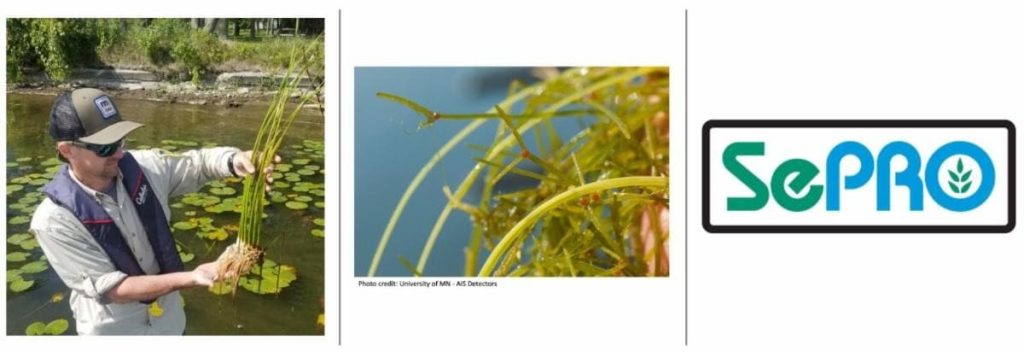
Keegan Lund from SePro will talk about a creative approach to proactively stop the spread of starry stonewort in Minnesota. We ended 2025 with 37 waterbodies infested since the first infestation was found 10 years ago at Lake Koronis. Getting a handle on this high impact AIS is critical now! Keegan has been with us before, and you may also remember him as an AIS specialist at the DNR. (March 17, 2026)
2026 Legislative Agenda
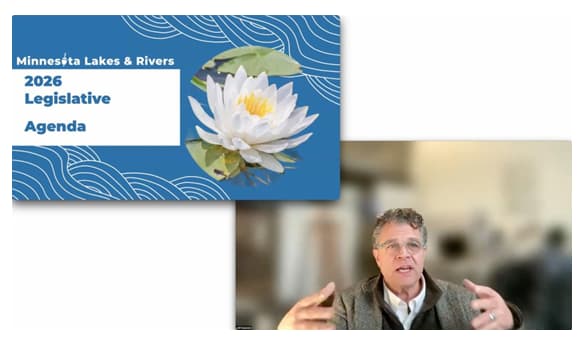
Jeff Forester from MN Lakes and Rivers Advocates gave us a preview of the 2026 Legislative session along with an overview of their strategy to help retain the annual distribution of $10 million in AIS Prevention Aid. This latter topic is of vital importance in our efforts to prevent the spread of AIS in the state. (December 9, 2025)
Wrap Recycle Right
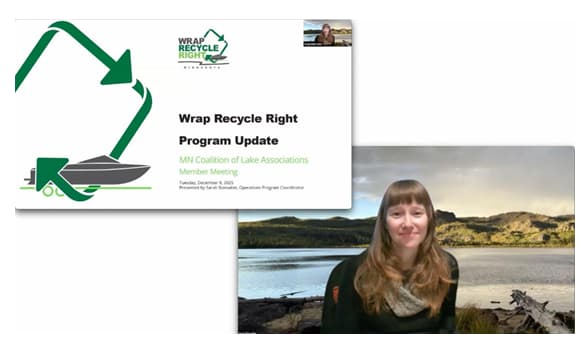
Sarah Bonvallet, Operations Program Coordinator, spoke about Minnesota’s new boat wrap recycling program, what this means for you, and how lake and river associations can help your members know what to do. (December 9, 2025)
Modernizing HOA Management: Lessons from PayHOA
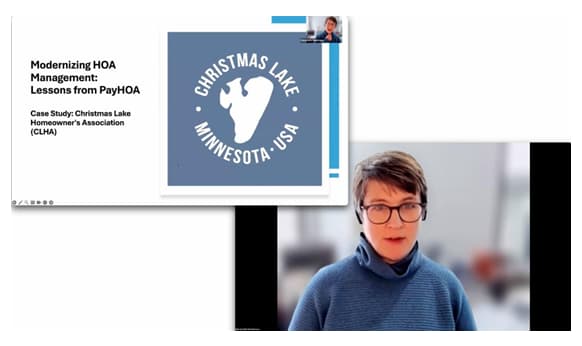
Margrette Newhouse, Treasurer of the Christmas Lake Homeowner’s Association, spoke about how the lake association is using software designed for homeowner’s associations to streamline much of the work related to member dues, communications, accounting, document storage, and more. (December 9, 2025)
Regional AIS Inspections
The Wright County Regional Inspection Station experiences and outcomes were discussed at the 2025 Annual Meeting. You can watch the video and view the slides from the presentation. (June 17, 2025)
Spotlight on GCOLA
The Gull Chain of Lakes Association highlighted their lakes at the 2025 Annual Meeting. You can watch the video and view the slides from the presentation. (June 17, 2025)
State of the Market
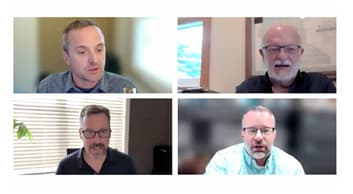
Four lake management professionals – Keegan Lund, James Johnson, Dr. Ryan Wersal, and MN COLA’s Kevin Farnum – gathered to discuss treatments for AIS, algae, and other factors affecting clean water. You can watch the video from the presentation. (June 17, 2025)
2025 Minnesota Boating Guide
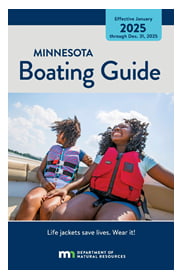
The 2025 boating season brings a few new rules and new requirements for boaters. We were pleased to have Lieutenant Eric Sullivan, the DNR’s Marine Unit Supervisor, as our first speaker. He outlined the new mandatory education and boat operator’s license, and provided the latest information on who is impacted and what they will need to do. You can watch the video and view the slides from the presentation. (March 18, 2025)
Minnesota’s Beavers!
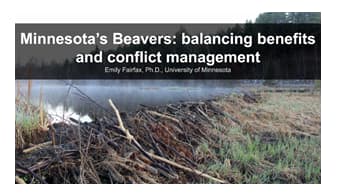
You might be thinking about them as a nuisance species because of the property damage they can cause, but these aquatic animals can be a very positive force for the environment as “nature’s engineers”. An expert on beavers is right here in Minnesota working at the U of M. Beavers are gaining popularity around the world as a partner in climate change adaptation and mitigation work. But how do we balance human, ecological, hydrological, and economic considerations when we work with beavers?
Presenter Emily Fairfax is an Assistant Professor of Geography in the Department of Geography, Environment, and Society at the University of Minnesota, and is also affiliated with the Saint Anthony Falls Laboratory. You can watch the video and view the slides from the presentation. (March 18, 2025)
Spotlight: Sauk River Chain of Lakes
Richard Gallea discusses the Lake Steward Program he’s driving at the Sauk River Chain of Lakes. You can watch the video and view the slides from the presentation. (March 18, 2025)
Otter Tail County’s Vacation Home Rental Ordinance
Chris LeClair, Director of Otter Tail County’s Land and Resource department, presenting on Otter Tail County’s ordinance regarding vacation home rentals. The county’s ordinance went into effect on July 1, 2024. Vacation home rentals can impact public health, safety, quality of life, as well as water and environmental quality. Many of your lakes, towns and counties are wrestling with vacation home rentals and their impacts, so looking into Otter Tail County’s new ordinance will make us all smarter. You can watch the video from the presentation (September 17, 2024)
Septic Systems and Water Quality
Our meeting was held during the EPA’s SepticSmart Week 2024 (purely coincidental), and since many our lake and river properties use septic systems or holding tanks, we thought that would be a great tie in to our collective interest in water quality. And it also ties into our meeting’s first speaker, as septic system are one of the vacation home rental concerns. We were very fortunate to have Sara Heger, from the U of MN’s Onsite Sewage Treatment Program setting the stage at our MN COLA meeting to talk about the connection of septic system and water quality. She is the go-to person for all things septic! You can watch the video from the presentation. (September 17, 2024)
Protecting MN’s Public Waters – an update from Kathryn Hoffman
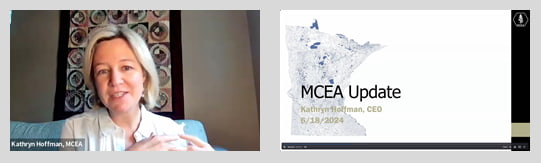
Kathryn Hoffman, CEO of the non-profit Minnesota Center for Environmental Advocacy (MCEA), will brief us on the efforts they have underway to protect Minnesota’s public waters. MCEA’s lawyers and scientists are directly involved with environmental legislation in St. Paul and in every major legal fight to protect our water. You can watch the video here. (June 18, 2024)
Minnesota Sea Grant Extension Program offerings
Hilarie Sorenson is the newly appointed Water Resources Extension Educator for MN Sea Grant. She is charged with helping to address complex water quality issues through resources and programs. In this meeting she explained her new role in a presentation of Minnesota Sea Grant programs. You can watch the video here. (June 18, 2024)
Hydrilla: A formidable AIS coming our way
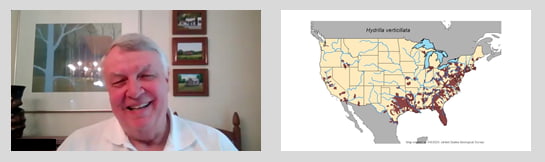
Dr. John Rodgers from Clemson University discussed hydrilla, one of the most concerning AIS that has not yet reached Minnesota. He followed the infestation spread from Florida up the east coast and now in Michigan, the impact on lakes, and what to expect. Many of us became familiar with Dr. Rodgers when starry stonewort was found in Minnesota in 2015 and he consulted on management. Hydrilla is considered by many to be the world’s worst AIS. You can watch Dr. Rodgers presentation video here, and the followup Q&A session here. (June 18, 2024)
Effects on lake due to the limited snow cover during the winter of 2023-24
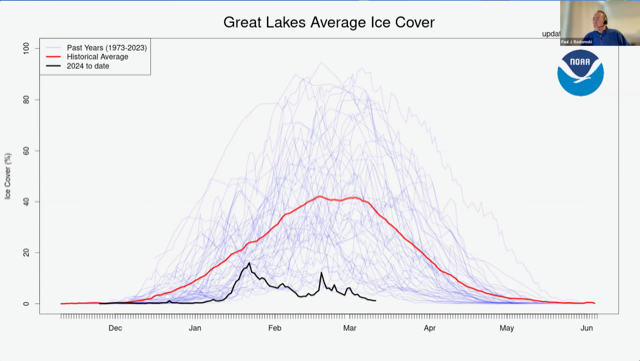
Paul Radomski of the MN DNR and Steve McComas of Blue Water Science teamed up to present their studies and predictions of the expected results of the limited snow cover and ice on Minnesota lakes. Radomski presented his studies of the resultant effects and impacts to fisheries due to the limited snow cover and ice on the great lakes. He presented charts showing the average world daily land and sea temperatures which show steady increases over the last few years. He showed that the Great Lakes are experiencing declining ice. He then brought it closer to home with historical charts for Minnesota. He discussed what we might expect in Minnesota lakes with respect to both fisheries and vegetation. Here is the video presentation. (March 9, 2024)
Steve McComas then took the lead to discuss what we should expect in Minnesota lakes during the 2024 season. He expects a lower than normal nutrient load as little snow resulted in diminished runoff. For the same reasons he expects a higher than normal water clarity. Because of the late ice-in and early ice-out (and much less ice fishing) there was less pressure on fish, meaning we should expect to see more fish. But we should also expect to see more vegetation. Warmer temperatures should result in more growth of curlyleaf pondweed (CLP). McComas’s presentation can be viewed here. (March 9, 2024)
Radomski and McComas then teamed up to lead a very informative and lively Q&A session. They added perspective and details to their presentations. The Q&A session can be viewed here. (March 9, 2024)
Evidence for Climate Change in Minnesota: Impacts on Water Resources
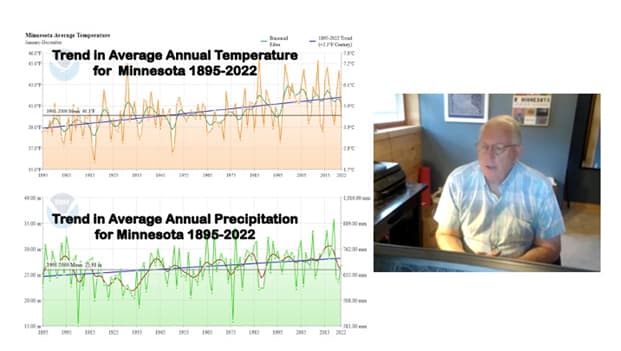
Dr. Mark Seeley, renowned climatologist/meteorologist from the University of Minnesota, gave us an eyes-wide-open presentation about climate change, with a focus on Minnesota. There is a high degree of climate variability, and in particular, Minnesota is experiencing higher temperature and rainfall erraticism. Mega rains are more frequent and higher dew points are preventing cooling. Lakes are warming—particularly shallow lakes, and there is less ice cover in the winter. Dr. Seeley puts it into focus and provides evidence of where we may be heading (September 26, 2023)
Michigan’s Glen Lake Association sets a high bar protecting water quality
Our Lake Resiliency topic at the March Membership meeting was a follow-up to December’s presentation on using drones for surface water management, but it was much more.
Rob Karner, the biologist for the Glen Lake Association in Michigan, took center stage and talked through their comprehensive approach to using their shoreline survey to drive water quality improvements. Rob was supported by Dennis Wiand and Ron Reimink who spoke about the drone technology in December. It was a fascinating discussion, full of common sense and insights. One came away from the discussion with the thought that this is a lake association that is driven to preserve and protect their water quality. They are well organized, focused, and have set the bar very high. Everyone who watches the video can gain something that will help propel your lake association forward. It’s worth your time! (March 14, 2023)
Using Drones for Lake Management
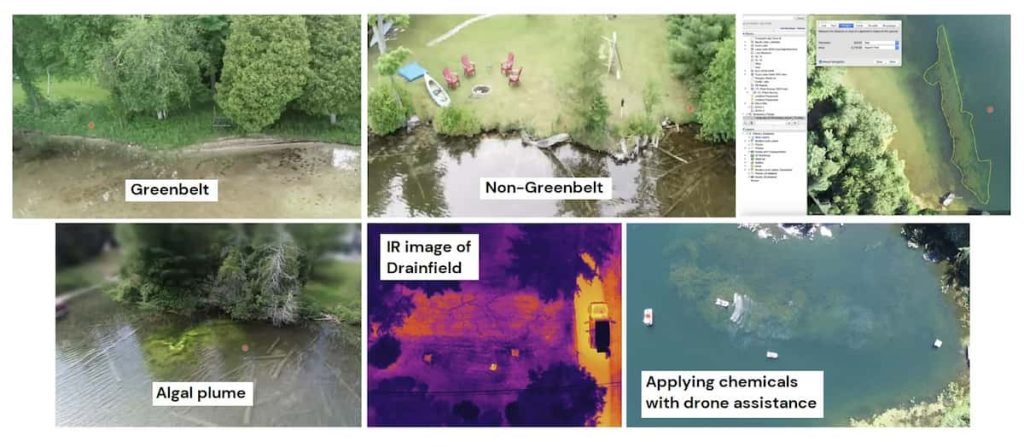
Rebecca Carlson rolls back the clock 20 years to illustrate how satellite and drone technology have developed enabling huge improvements in efficiencies and capabilities in water management. Rebecca introduces Dennis Wiand, ZeroGravity Ariel, and Ron Reimink, Freshwater Solutions, both of Michigan demonstrate their work and how it changes and improves water management. The two discuss their work with lake associations to assess shorelines where problem areas are discovered. Drones are also used in assessing drainfields, aiding precise chemical and benthic mat applications, and in general assessment of lakes. Identification of specific species from the air is also explored. This is a new application of drones and we’re still on the steep rise in the learning curve. (December 6, 2022)
2nd Tier Developments – what are they and why should we care?
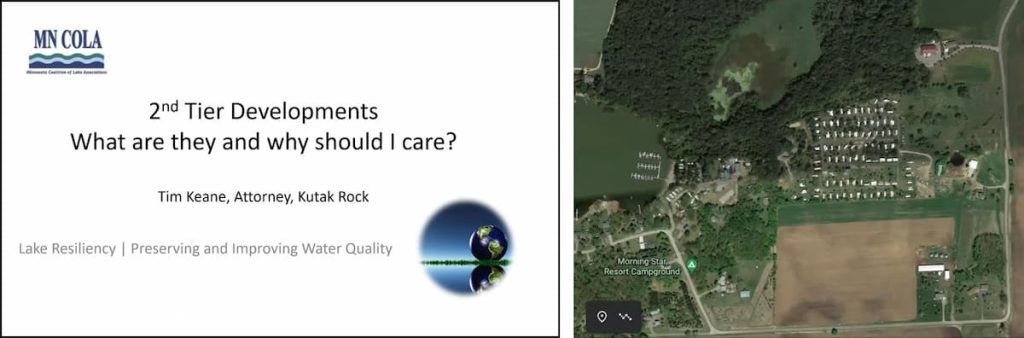
This presentation focuses on understanding the connection between natural shorelines and their impact on water quality. Attorney Tim Keane discusses the impacts of 2nd Tier developments on lakes and rivers. Tim describes what they are and why you should care as he outlines the related issues around 2nd tier developments. As a real-world example the image on the right shows 126 trailer slips that were combined with six cabins to form a large recreational community on a 1509 acre lake that was already nearly fully developed. (September 20, 2022)
Vanishing Natural Shorelines
After a brief review by Rebecca Carlson, Paul Radomski from the MN DNR makes the connection between natural shorelines and their impact on water quality. Paul also talks about 2nd tier developments around lakes and rivers. (June 14, 2022)
Protecting the Sponge
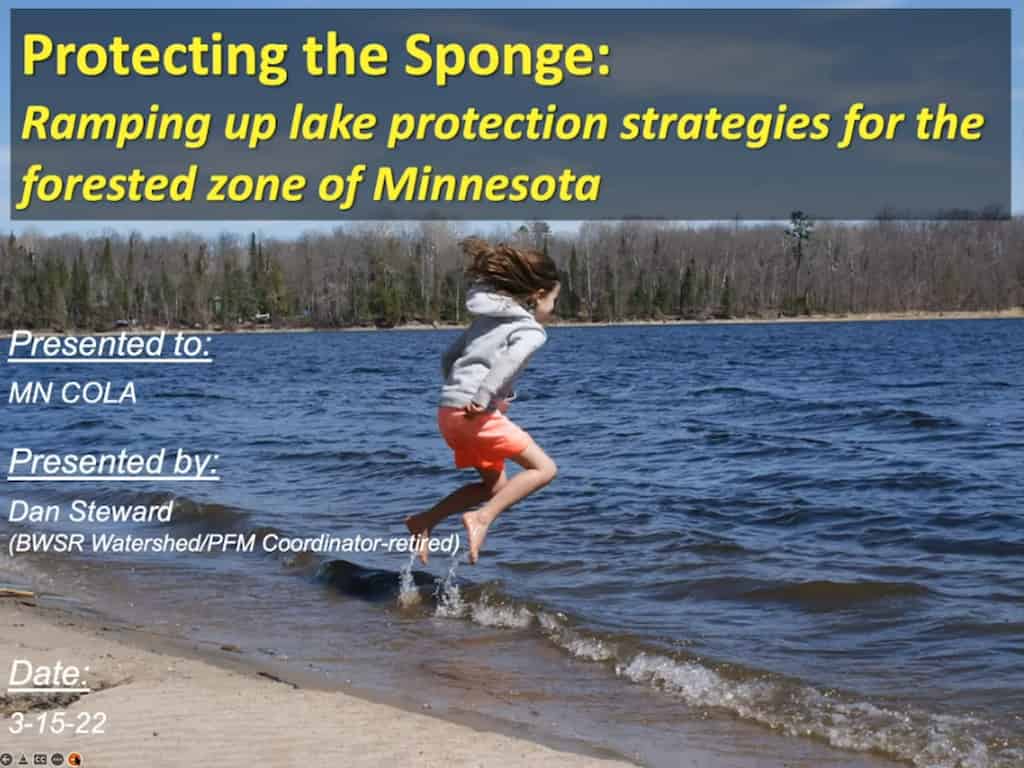
The “sponge” refers to the forests and lands around lakes and they substantially contribute to the health of the lake. Understanding the importance of the “sponge”, a.k.a., the forests, and how they interact with the lake is essential in understanding the lake itself and its water quality. Rebecca Carlson, Administrator and Engineer, Clearwater River Watershed District, refocuses the audience on lake resiliency. Then Dan Steward, Board of Soil & Water Resources-retired, explains why it’s important to “Protecting the Sponge”, describing the substantial impact surrounding forests and lands have on water quality. (March 15, 2022)
Hybrid Cattails – what’s the concern?
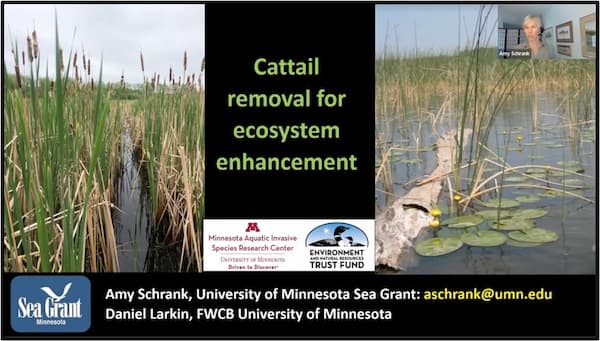
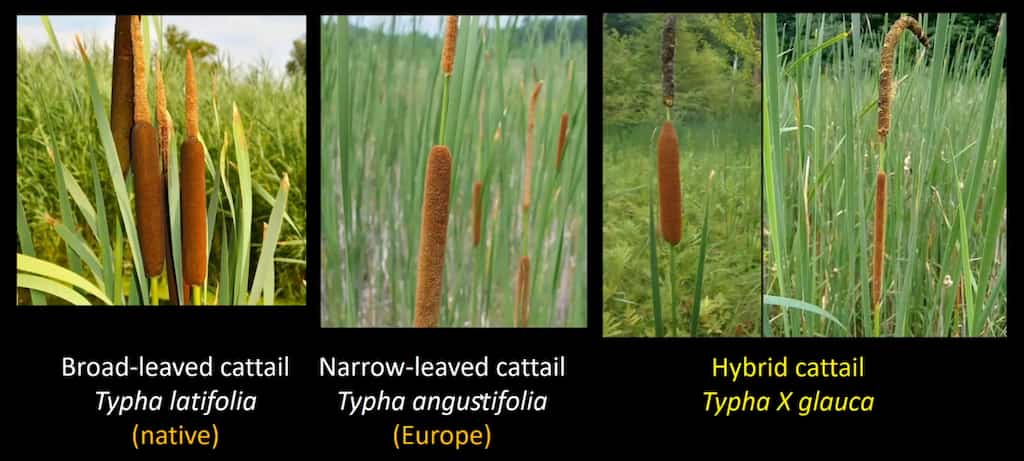
Amy Shrank, University of Minnesota Sea Grant program, provided an overview of her research that began in 2021 to achieve a healthier lakeshore ecosystem by removing invasive hybrid cattails. Hybrid cattails are invading Minnesota and Amy describes the situation and the threat. She guides the viewer to better understand how removing invasive hybrid cattails can achieve a healthier lakeshore ecosystem. (December 7, 2021)
Climate Change and Lake Resiliency
Climate change is happening, but what should we be expecting here in Minnesota? Jim Kutzner from MN COLA provided an overview of the climate change impacts on lake resiliency. This brief overview covers recent predictions and details of the expected effects of climate change in the upper Midwest. Predictions come from both the Sixth Assessment Report from the Intergovernmental Panel on Climate Change, an offshoot of the United Nations, and from the Fourth National Climate Assessment (Volume I and Volume II), from the US Global Change Research Program. Predictions include how climate change is expected to affect lakes, crop production, and other matters important to Minnesotans and Minnesota waters. The famous “hockey stick” chart is discussed where global temperatures began to rise above pre-industrial levels around the mid 20th century and have continued to rise unabated.
Lake resiliency is very important to MN COLA, who made it the theme for 2022 membership meetings and this continues into 2023. (December 7, 2021)