
Conferences & Events

MGLP Lake Conservation Series: Walleye stocking success in the Midwestern USA – November 17
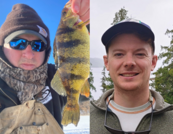
Robert Davis & Daniel Isermann discuss factors involved in walleye stocking. This study evaluated stocking success of Walleye in lakes and reservoirs across the Midwestern United States to inform stocking practices for state agencies. Demand for Walleye stocking may increase if climate change limits the potential for natural recruitment in lakes. Consequently, the strategic distribution of Walleye stocking may maximize fishing opportunities. Latitude and year explained relatively little variation in stocking success compared to within‐lake variation. Relative abundance of Largemouth Bass was an important indicator of Walleye stocking success for fry and fingerlings, with stocking success generally decreasing with increased bass abundance. There was an interaction between lake surface area and growing degree‐days, as large lakes (>2500 ha) seemed to be more conducive to Walleye stocking success regardless of growing degree‐days. The models that we developed did not accurately predict exact levels of Walleye stocking success but were 92–94% accurate in predicting whether the stocking success of both fry and fingerlings would be at or above the 50th percentile. These findings may help to inform the management and stocking allocation of Walleye and suggest that future increases in Largemouth Bass abundance and growing degree‐days could limit the effectiveness of stocking in some lakes.
Register here for this event.