Tag: zebra mussels

MAISRC pilots eDNA lab

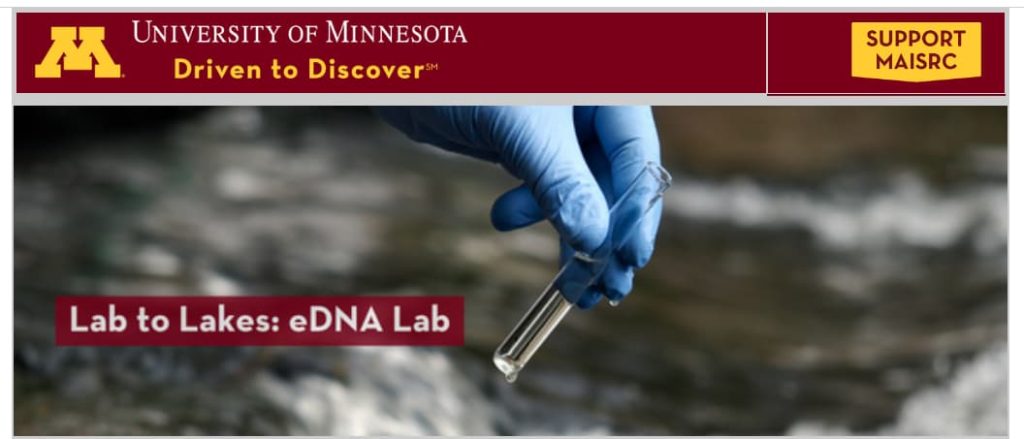
U of MN MAISRC eDNA Lab title block and logo

The Minnesota AIS Research Center at the University of Minnesota (MAISRC) just announced it is piloting a new eDNA testing lab. They are currently recruiting volunteers who are interested in testing Minnesota’s lakes and rivers for zebra mussel eDNA.

You will need to act quickly if this sounds interesting and you want to volunteer, as the window for applying closes on June 12.

Early detection of aquatic invasive species (AIS) is an important factor in slowing or stopping the spread in a waterbody. More detections require more people. Fortunately, MAISRC research has demonstrated that volunteer-collected samples are as accurate as University scientists, making large-scale environmental DNA (eDNA) monitoring feasible.
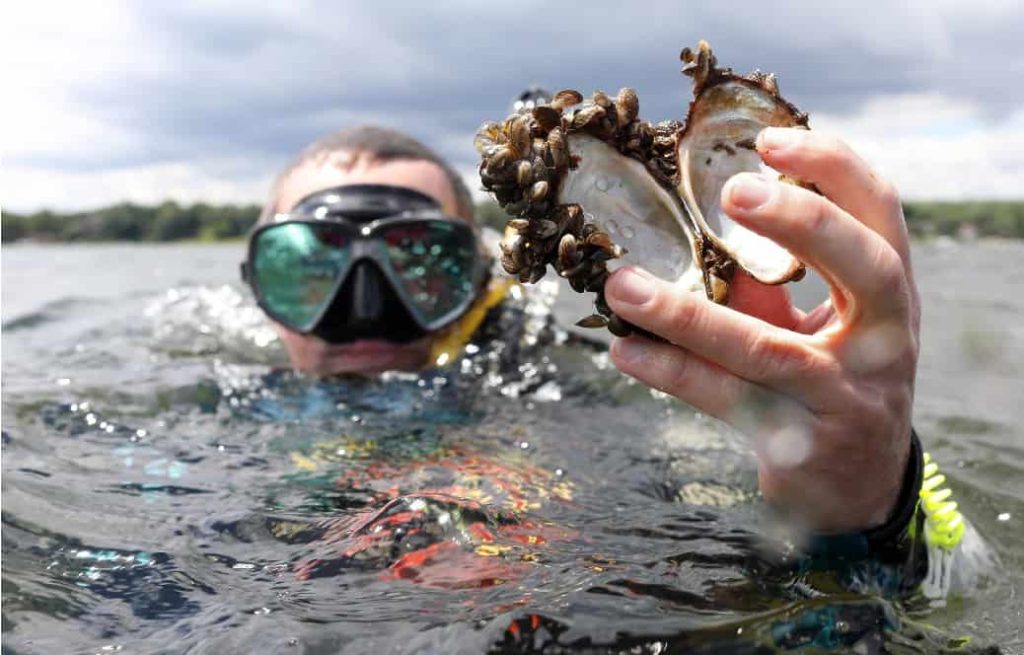
woman diver at the surface holding a cluster of zebra mussels attached to a clam shell

Now we are implementing this research to pilot an eDNA testing lab to monitor statewide. We are currently recruiting volunteers who are interested in testing Minnesota’s lakes and rivers for zebra mussel eDNA

Who can participate?
Individuals or groups such as lake associations, watershed districts, lake improvement districts, Tribal representatives, and others; we are excited to work with a variety of partners and to collect data for waterbodies with and without confirmed zebra mussel infestation. In addition to lakes with unknown zebra mussel status, we are accepting samples from lakes with previously confirmed populations of zebra mussels in order to validate our process.

What are participant requirements?
Participants are required to fill out an expression of interest form that contains the following information:

  • contact information of the person who will take the samples,
  • an estimated time for when you will sample the lake, and
  • an action plan for what you and/or your organization will do in response to the results. We recommend discussing this action plan with your local jurisdictional authority (LID, SWCD, other local unit of government, DNR AIS specialist, etc).

For lakes within the boundaries of Tribal reservations, permission from a Tribal representative to collect water samples for eDNA surveillance will be required.

What is MAISRC’s role?

  • Gauge interest and select participants
  • Send participants sampling kits containing everything needed for sampling. Participants will receive one kit per lake, if sampling multiple lakes, they will receive multiple kits.
  • Receive filters and equipment
  • Send sample results to participants and jurisdictional authorities

What is the timeline for this project?
This first season is a pilot with the goal of scaling up to test for more species and transition to being a fee-for-service model.

  • June 1 – June 12: Interest form is open
  • June 15: Participants contacted and selected based on availability of kits and other criteria
  • End of June/early July: Testing kits sent
  • July – August: Sampling takes place and results generated

If you are interested in participating in our eDNA pilot project, fill out the interest form below. If you have additional questions, reach out to the team: labtolakes@umn.edu.
Here is the eDNA Sampling Form.

MAISRC seeks proposals for research

MAISRC driven logo

MAISRC is seeking proposals for research studies to advance early detection and prevention of the establishment aquatic invasive species (AIS), create and improve options for AIS control, and assess risk and species impacts to prioritize management actions in Minnesota. Through this competitive Request for Proposals (RFP), MAISRC will administer an estimated $2,300,000 to fund high-priority research needs focused on both new lines of research and continuation of existing projects. 

Proposals are invited from investigators at any Minnesota-based academic, governmental (federal, tribal, state, local), or non-profit research institution or organization with demonstrated capacity to conduct rigorous scientific research. Proposed work should build capacity within and benefit the state of Minnesota.

The deadline for pre-proposals is March 2, 2026, at 11:59 PM CST. For more information, go to MAISRC’s 2026 RFP webpage.

DNR hosts 2026 Roundtable

2026 MN DNR Roundtable logo

The DNR’s annual Roundtable was held on January 9, 2026. 

Jim Kutzner (MN COLA) and Sue Wolf (President of the Cedar Lake Conservation Club in Wright County) attended the event and have provided a terrific writeup. Their writeup includes links to some of the recorded portions of the program. It’s worth reading! Click here to read the writeup.

DNR conducts roadside watercraft inspection in Wright County

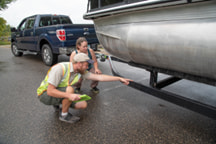
DNR doing an AIS roadside check of watercraft
Photo credit: MN DNR

So, what’s up ahead? Wow, the DNR is doing an AIS roadside check of watercraft!

At the end of June on a Friday afternoon, the Minnesota DNR conducted a roadside inspection of watercraft on Highway 55 in Wright County, just east of Annandale. This part of Wright County, known as “Heart of the Lakes,” boasts highly recreated lakes within an hour of the metro.  Also, it is home to three lakes with populations of starry stonewort, an invasive species.

The roadside check was on June 28th from 3:00 to 6:30pm. Major Scott Staples, Enforcement Division, MN DNR reports that 16 watercrafts were inspected with one violation noted. A citation was issued for transporting aquatic plants.

“This is just a small sample of what we have been doing statewide,” Major Staples shares. “We have been doing check stations for about 10 years and statewide compliance has been about 90%”.

Thanks to the DNR for this visible and expanded component of the Watercraft Inspection Program.

MN COLA announces speakers for Annual Meeting

MN COLA June 2024 Annual Meeting speakers image

What do Kathryn Hoffman (left), Dr. John Rogers (right), Jeff Forester (top), and Hilarie Sorenson (bottom) all have in common?

They are all speaking about water at the MN COLA Annual Meeting on June 18 from 9 am – 11 am CT. The meeting is guaranteed to be interesting and informative, and we hope you will attend.

Register here for the Zoom meeting.

Meeting topics and speakers:

  • Election of Directors for the MN COLA Board. Director terms are 3 years and we have several seats to fill. Note: if you have interest in joining the MN COLA Board, please contact Kevin Farum to register your interest.
  • Kathryn Hoffman, CEO of the non-profit Minnesota Center for Environmental Advocacy (MCEA), will brief us on the efforts they have underway to protect Minnesota’s public waters. MCEA’s lawyers and scientists are directly involved with environmental legislation in St. Paul and in every major legal fight to protect our water. Kathryn last joined us in December 2020 and she was very well received.
  • Jeff Forester from MN Lakes and Rivers Advocates will provide us with an update on the short 2024 Minnesota Legislative Session that ends on May 20.
  • Hilarie Sorenson is the newly appointed Water Resources Extension Educator for MN Sea Grant. She is charged with helping to address complex water quality issues through resources and programs. We offered her the opportunity to explain her new role and also to hear from you, our caring lake and river volunteers about your priorities and needs. So besides getting to know Hilarie, you can help her help us with a few polling questions during her presentation.
  • Dr. John Rodgers from Clemson University will talk to us about hydrilla, one of the most concerning AIS that has not yet reached Minnesota. He will follow the infestation spread from Florida up the east coast and now in Michigan, the impact on lakes, and what to expect. Many of you became familiar with Dr. Rodgers when starry stonewort was found in Minnesota in 2015. We are so pleased that he will spend some time with MN COLA.

As always, everyone welcome to attend, so feel free to forward this meeting information.

Inland waters need the forest!

MN COLA Home Page hero image - reduced size

MN COLA strongly believes in the need for keeping and reclaiming natural shorelines. This is especially important with the trend of turning part-time cabins into full-time homes. We have many resources on our website to make that case, but it is up to us, as shore owners to understand the impacts of making changes at the shoreline and to retain and/or reclaim the elements that favorably affect water quality.

Michigan Lakes and Streams Association logo

With the permission of Michigan Lakes and Streams Association, we are pleased to provide a link to a terrific article that highlights the important connection between forests and lakes for strong water quality, shoreline stabilization, resistance to AIS, and a strong fishery.

The science supports keeping the forest and lakes connected!

It’s AIS season. Ready, Set, Go!

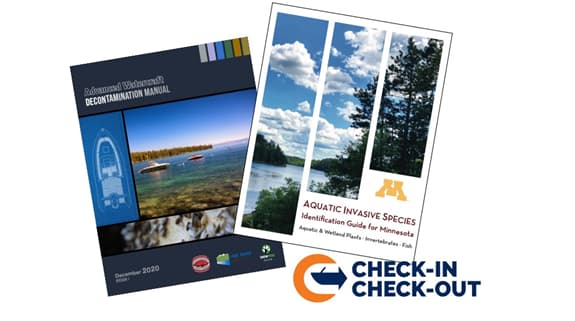
Check In - Check Out - images of cover pages of boat decontamination manual and AIS identification booklet

The open water boating season is here and many of your organizations are involved with AIS inspections, inspectors, and early detection activities. Here are a couple of things you may not know about which may help.

The Lake Tahoe watercraft decontamination manual is well-organized with 91 pages of photos and great content, including nearly 30 pages of manufacturer-specific decontamination considerations.

The MAISRC AIS identification guide contains tips for identifying a number of aquatic invasive species (AIS) that are considered high-risk to Minnesota waters, as well as some common native lookalike species. You can download it for free, buy the book, or become an AIS Detector and get the book — plus tons of hands-on training!

The free Check-In, Check-Out program was designed by our friends at CD3 to educate boaters on hand cleaning different types of watercraft and trailers. Simply place the Check-In, Check-Out QR code at a visible location at your boat launch. 

AIS Infestations rising in 2023

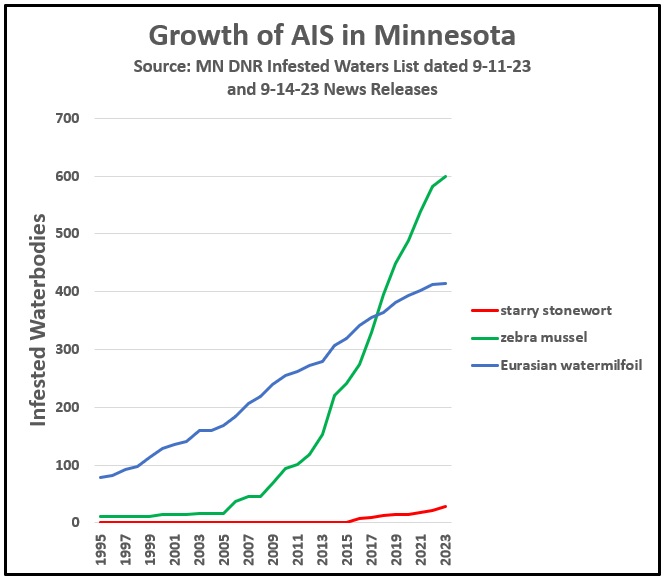
Chart of AIS growth in MN 1995-2023-starry stonewort, zebra mussel, and EWM

Death by a thousand cuts! We can become immune to the repeated announcements of new lakes becoming infested with AIS, but we shouldn’t. The season for reporting AIS infestations is not over and we should expect the 2023 numbers will grow.

The 3 species graphed above threaten the recreational value of our public waters, and they keep growing, increasing the annual costs to keep the species under control and the lakes usable.

So far in 2023, we have 6 new infestations of starry stonewort: up from 22 since 2015. That’s a 27% increase this year alone. A troubling growth rate for a very troubling species that is still early in its infestation life cycle.

Zebra mussel infestations year to date are up 17 on a base of 582. If that low double-digit increase holds, it will have been a good year. Be aware that more infestations typically get identified as we pull out boats, docks, and lifts.

Eurasian watermilfoil only racked up 2 new infestations so far, so perhaps it’s trending down. And that’s good.

While waterbody counts may be slowing, you should be aware that most large lakes in Minnesota have 1 or more AIS, and the percentage of Minnesota’s surface water infested with AIS is very high.

Free to a good home: Specialized lake netting

Netting that was used for on Lake Koronis as part of a pilot project to control starry stonewort is available for free to a good home.

Each net is 300’ long, 6’ deep, and plastic coated. 4 nets are available: 2 nets have 3/8” holes, 2 nets have 3/16” holes. The nets have floats on the top and weights on the bottom. The nets were decontaminated and have been in storage since 2017. Other details are available.

Contact Kevin@Farnum.info if your lake association can use any of these nets for any purpose.