Category: Issues

What’s Your Plan for Used Boat Wrap? Recycle it!

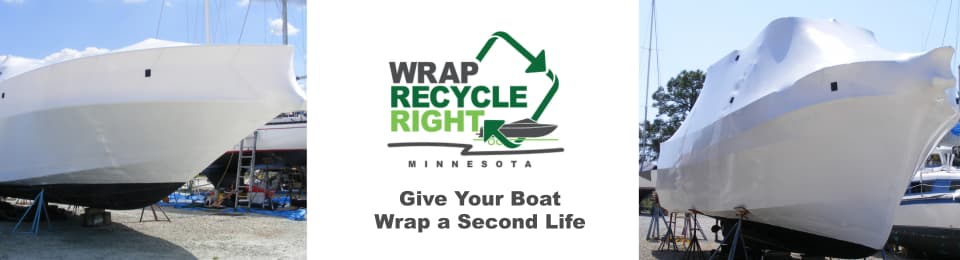
Three images - top wrapped boats on the left and right, and the WRR logo and tag line "Give your Boat Wrap a Second Life" in the center

Wrap Recycle Right is the branded program of a nonprofit stewardship organization that represents boat wrap producers and develops and operates a recycling program under Minnesota’s Boat Wrap Stewardship Law (Minn. Stat. § 115A.1416)the first such law in the United States. The Wrap Recycle Right program details are laid out at their website https://www.wraprecycleright.org/.

Across Minnesota, boats are starting to come out of storage. Wrap Recycle Right is continuing to expand collection options to make recycling more accessible for boat owners, businesses, and partners across the boating community.

Program Map

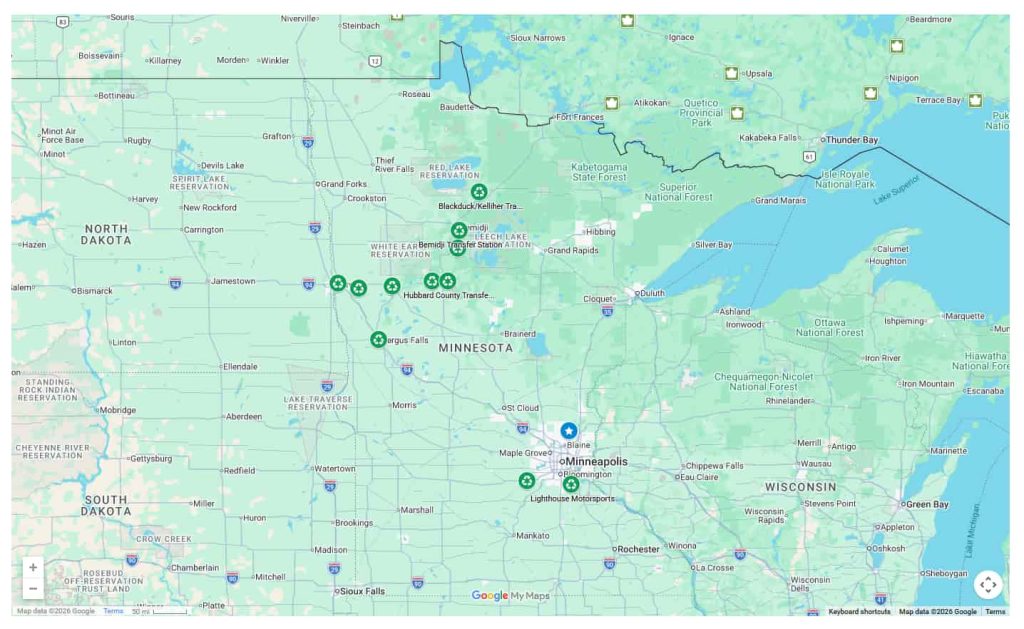
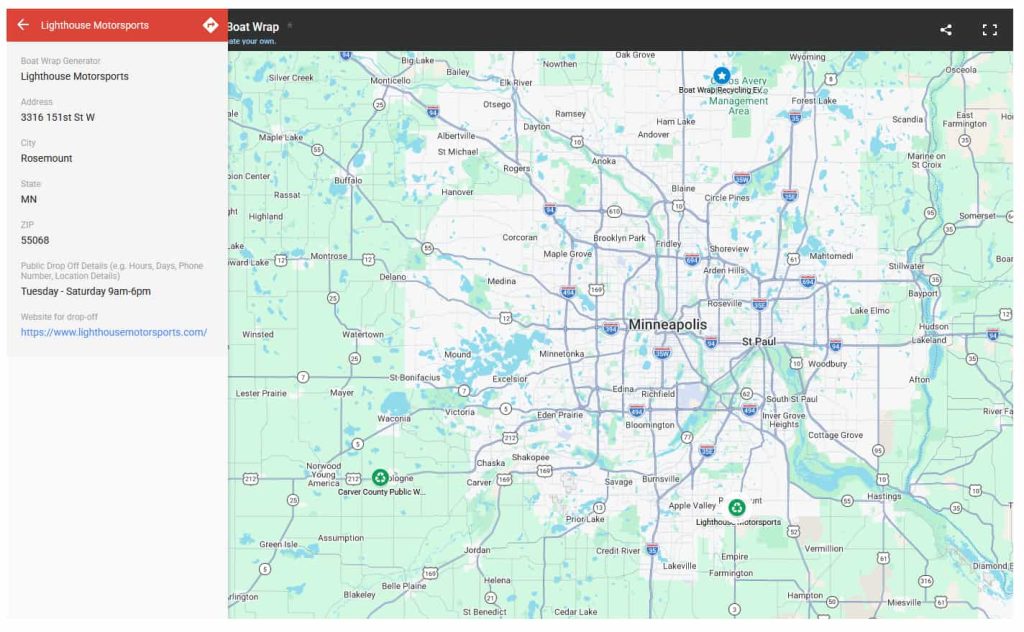
The interactive program map shows the confirmed drop-off locations for used boat wrap. The map will be updated as new drop-off sites come online. Click on the image below to open the interactive map.

static image of active Wrap Recycle Right rollout map as of 4/16/2026

Clicking on a specific site will slide in information on that drop-off location and its open times.

closeup static image of active Wrap Recycle Right rollout map with a collection site selected as of 4/16/2026

Program Schedule

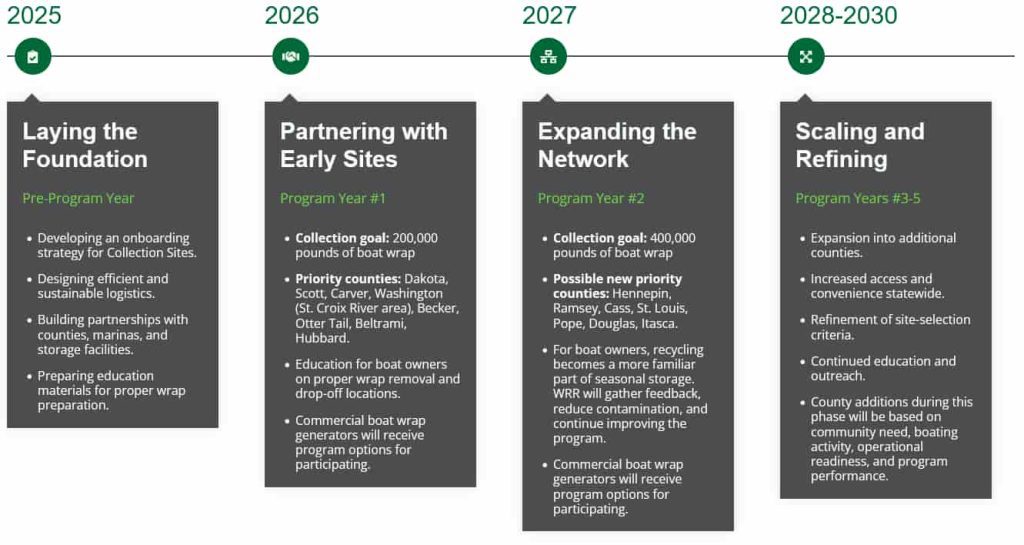
WRR program managers realize this rollout will take time for adoption across the state and they share their schedule here. Their program rollout is laid out in four stages over the next five years. Specific counties are on the schedule in the first few years. The schedule remains flexible in the later years as the program rolls out.

WRR Program Schedule as of 260416

For more information contact the program manager at info@wraprecycleright.org.

Wrap Recycle Right program logo

Boating industry position on safe surfing

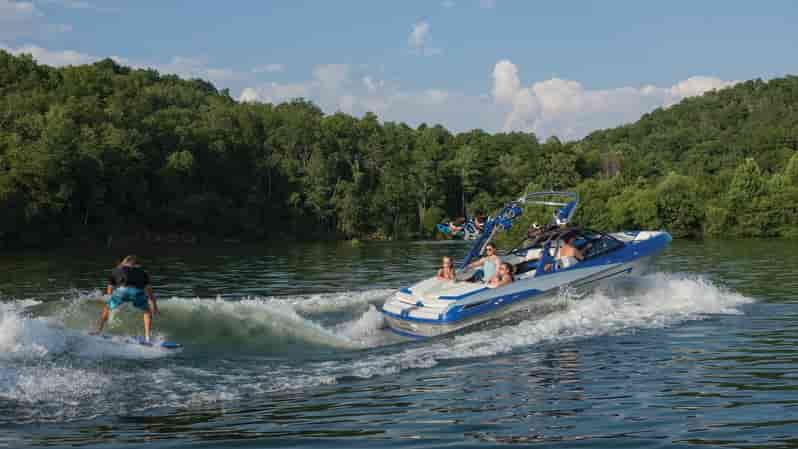
image of wake surf boat with surfer behind and people in the boat

The National Marine Manufacturers Association (NMMA), one of the principle marine industry associations, has released their position on wakesurfing. It should be of no surprise that they are pro-wakesurfing as their members include, among others, the surf boat manufacturers. 

NMMA is pushing this position across the U.S., Minnesota included. On December 26, Outdoor News, a Minnesota-based media outlet published a letter to the editor from NMMA detailing the NMMA wakesurfing position. 

NMMA states they support statewide regulations which are fair for all and science based. Unfortunately, they chose the research that their boating industry organizations have funded, which does not match the groundbreaking research from the University of Minnesota’s Saint Anthony Falls Laboratory.

NMMA believes a statewide standard that requires wakesurfing 200 feet from shore in depths of 10 feet or greater minimizes environmental impacts

The U of MN research on wave energy from wakesurfing suggest that the distances from shore need to be much greater to achieve a less destructive wave hitting the shore. And their research on lakebed impacts from wakesurfing suggest that the depth of water need to be much greater to minimize the environmental impacts.

Enbridge, DNR reach $2.8M agreement to resolve Line 3 aquifer breach

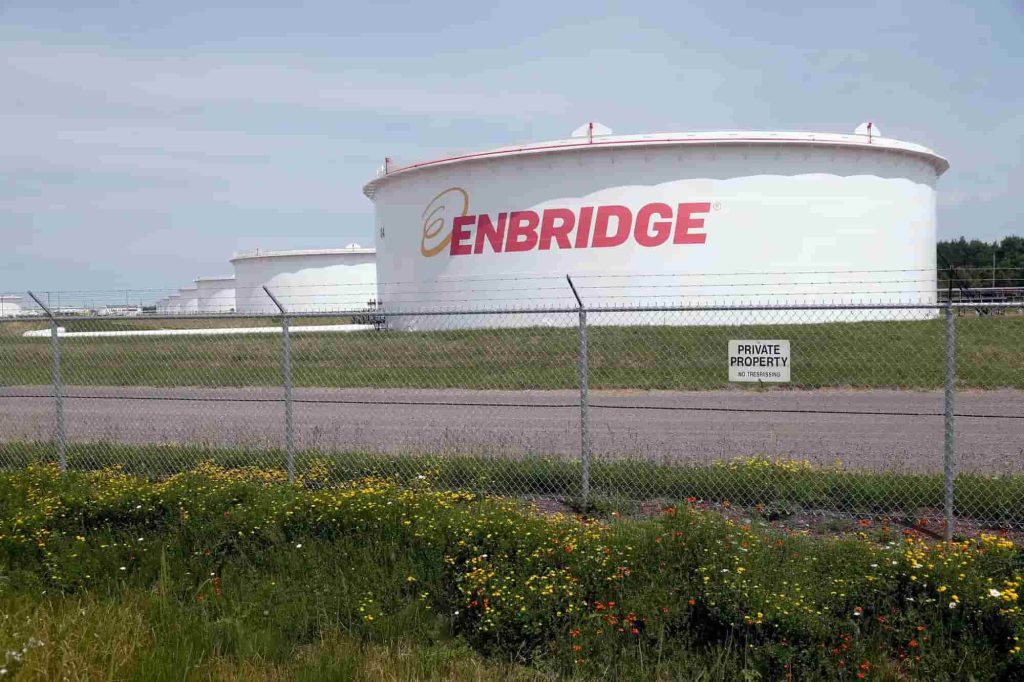
image of large oil tank with Enbridge name

With the Christmas holiday approaching you may have missed this. 

On December 22, 2025, Minnesota Public Radio reported that Canadian company Enbridge has agreed to a nearly $3 million settlement for piercing a groundwater aquifer while building the Line 3 oil pipeline in northern Minnesota.  The MN Department of Natural Resources said it reached the agreement with Enbridge over the aquifer breach that was discovered in 2022 near Swatara in Aitkin County

A new $28M program for the environment

MN ENTRF Community Grant Program logo

Funded by Minnesota’s Environment and Natural Resources Trust Fund (ENRTF) and managed by the MN DNR, the new Community Grant Program will support projects for the public purpose of protection, conservation, preservation and enhancement of the state’s air, water, land, fish, wildlife and other natural resources.

The program will increase the number and diversity of grant recipients who receive ENRTF funding, especially in communities that have been adversely affected by pollution and environmental degradation. Grant awards will benefit communities and residents in all regions of our state.

During the 2025 session, lawmakers appropriated just over $28 million from the ENRTF to the DNR for the Community Grants Program. That funding is available until June 30, 2029. The MN DNR is in the process of developing the structure and processes of the program. We will try to keep you in the look as more becomes known. In the meantime, you can get more information on this exciting new program on the DNR’s website.

Join the Minnesota Cattail Collaborative

MN Cattail Collaborative logo

This project, part of the MAISRC Lab to Lakes initiative, is testing invasive cattail management across Minnesota lakes; restoring native nearshore habitats, reconnecting lake ecosystems, supporting healthy fish communities, and empowering local management through participatory science.

Groups such as lake associations, watershed districts, lake improvement districts, state park managers, and others can participate.

If you have invasive cattails and want to get involved in this exciting research work, check out the Cattail Collaborative webpage for more information.  MN Sea Grant and MAISRC are recruiting participants this winter. They will be hosting a virtual workshop for participants and will help participants find management partners.

DNR hosts 2026 Roundtable

2026 MN DNR Roundtable logo

The DNR’s annual Roundtable was held on January 9, 2026. 

Jim Kutzner (MN COLA) and Sue Wolf (President of the Cedar Lake Conservation Club in Wright County) attended the event and have provided a terrific writeup. Their writeup includes links to some of the recorded portions of the program. It’s worth reading! Click here to read the writeup.

Recap of the MN COLA/SafeWakes seminar

MN COLA and SafeWakes logos in a single frame

Our members rank “enhanced wake activities” as one of their three most pressing issues. To that end, MN COLA has been working for years on the environmental and safety challenges from recreation using enhanced wakes. Finding ways to share and protect our incredible water resources is the goal and it will require several steps.

  • One step is to raise awareness and increase the understanding of the impacts of enhanced wake activities across the boating population. MN COLA was a vocal proponent at the 2023 legislature, arguing for a mandatory boat operator’s license in Minnesota intended to improve safety on the water. Obtaining that license requires that boaters complete an education program that addresses among other things, best practices related to boating safety, AIS, and minimizing conflicts on the water. 
  • Another step is obtaining the science to underpin possible solutions. MN COLA actively supports the work done by the St. Anthony Falls Laboratory at the University of Minnesota to understand the impact of boat wakes and propellor thrust. 
  • And we believe that some form of regulation will be required to achieve the balance needed for recreation, safety, and environmental protection. Unfortunately, a statewide approach isn’t likely in the near term. In the interim, obtaining local regulations on surface water activities may be possible using the DNR petition process. In fact, it was used in 2024 by Caribou Lake in Cook County to establish surface water restrictions on enhanced wake activities.

This special seminar was designed to provide an overview of the DNR petition process. 

Here are links to materials from the seminar, including:

Presentation slides in PDF format which you can download

References – these are important links discussed in the seminar

Recorded videos:

The presentation

The Q&A portion of the seminar

Septic Systems and Water Quality – What’s the Impact?

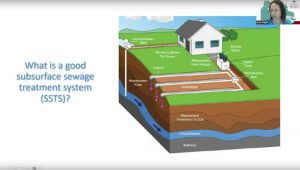
drawing of an underground properly designed septic system

Sara Heger, U of MN’s Onsite Sewage Treatment Program set the stage at a recent MN COLA meeting to talk about the connection between septic systems and water quality. She discussed Minnesota’s rules, as well as how a properly operated septic system functions, and what and how things can go wrong. She is the go-to person for all things septic!

Sara’s presentation can be seen HERE.

Otter Tail County’s Vacation Home Rental Ordinance

VRBOs and similar rental situations are raising some concerns among lake residents and one county has set rules and processes for managing rental properties to the benefit of all shoreland owners and users. Chris LeClair, Director of Otter Tail County’s Land and Resource department explained the new rules and led an excellent discussion of Otter Tail County’s Vacation Home Rental Ordinance. The presentation can be seen HERE.

DNR conducts roadside watercraft inspection in Wright County

DNR doing an AIS roadside check of watercraft
Photo credit: MN DNR

So, what’s up ahead? Wow, the DNR is doing an AIS roadside check of watercraft!

At the end of June on a Friday afternoon, the Minnesota DNR conducted a roadside inspection of watercraft on Highway 55 in Wright County, just east of Annandale. This part of Wright County, known as “Heart of the Lakes,” boasts highly recreated lakes within an hour of the metro.  Also, it is home to three lakes with populations of starry stonewort, an invasive species.

The roadside check was on June 28th from 3:00 to 6:30pm. Major Scott Staples, Enforcement Division, MN DNR reports that 16 watercrafts were inspected with one violation noted. A citation was issued for transporting aquatic plants.

“This is just a small sample of what we have been doing statewide,” Major Staples shares. “We have been doing check stations for about 10 years and statewide compliance has been about 90%”.

Thanks to the DNR for this visible and expanded component of the Watercraft Inspection Program.